
This place feels like a heaven the view which you get from this is really price less and unforgettable. It was my first trip for it which was from Ahmedabad to Agra holding so many expectations and not knowing that it will be true or not and then just enjoyed the view from the train which was the greenly waves which were flowing like it is an ocean view. The sun was about to rise and finally, I was in the destination to see the Taj mahal we get out from the train and the weather which was fantastic, and it was a cold smoky weather which was being seen like holding me Then there was a mosque might be and it was looking like a duplicate of Taj mahal but in another color. Then after we went to the hotel to get ready for the trip to begin and then went to the Agra fort the palace was really so beautiful and was worthy with my expectation to gate of palace was made up of red stones and it was too large for the persons to go through as it was place of the Mughal period I was feeling like the Architect of that period were having so much brain and talent to make this amazing monuments such as this. From that gate the king where being going with their Elephant and horse carts. It was really as same as shown in the movies the palace was having a big balcony which was being made up of
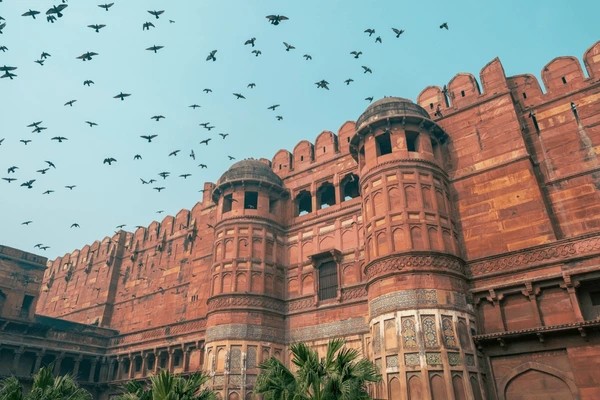
The Amar Singh Gate is the main entry point for tourists visiting Agra Fort. It stands as a majestic example of Mughal-era fortification architecture, built for defense but designed with elegance. It was like the beauty which is ben hold by the Agra the huge monument which is being built here looks so unrealistic I thought that only in movies it looks like this but in real life it looks more beautiful too. And the birds flying over it and the design which were curved on it looks like it has been done so carefully. Its original name is Akbar Darwaja which was being built by built by Emperor Akbar in the late 16th century around 1565 to 1573 as part of his massive reconstruction of the fort using red sandstone. It has been named after Raja Amar Singh Rathore, a Rajput noble and warrior in the Mughal court. And latterly it has been changed by Shah Jahan.
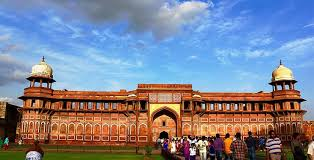
Jahangiri Mahal Palace built by Akbar for his son Jahangir
That’s a fantastic and well-structured overview of the Jahangiri Mahal! You’ve captured the essential history, architecture, and significance beautifully.
To “humanize” it, as you’ve requested, we can shift the tone from a factual report to a more evocative, personal, and descriptive narrative—almost like a tour guide sharing a secret. We can focus on the feel of the place, the personalities involved, and the stories embedded in the stone.
Here is your content, re-imagined with a more humanized and engaging voice:
Jahangiri Mahal – The Heart of Agra Fort
Introduction: The Jewel Within the Gem
We all know the Taj Mahal as the monument of eternal love. But if you let the crowds thin a little and turn your attention a mile or two away, you’ll find the sturdy, red walls of Agra Fort. Tucked deep inside this fortress, past the Diwan-i-Ams and public spaces, lies a building with a quieter, more personal history: the Jahangiri Mahal. This isn’t just a palace; it’s a profound, loving gesture—a magnificent home built by a father, Emperor Akbar, for his son, Prince Salim (who would become Emperor Jahangir). It’s a place where royal life, not just royal decree, unfolded.
Historical Echoes: A Father’s Gift
Think of this palace not as a cold historical structure, but as a spectacular inheritance. Though it bears the name Jahangir’s Palace, the irony is that it was Akbar who laid every foundation stone and oversaw every meticulous carving. It was built in the late 16th century, a magnificent, private residence intended to prepare young Prince Salim for the duties of kingship. It stands today as the largest and most complete royal residence in the entire fort—a testament to Akbar’s deep love and foresight for his heir. It’s where the future emperor spent his most private and formative years.
Architecture and Design: A Hug in Stone
Walk into the Jahangiri Mahal, and you are stepping into a profound cultural conversation. Akbar was a ruler who believed in bringing people together, and this philosophy is literally etched into the red sandstone.
It’s a breathtaking marriage of Mughal grandeur and the warm, earthy aesthetic of Hindu-Rajput architecture. Look closely, and you’ll see why it feels so unique:
- The Material Story: It’s primarily built from rich, fiery red sandstone, but look up! It’s beautifully softened and accented with pristine white marble and delicate, hand-carved floral motifs that climb across the walls like vines.
- The Facade’s Embrace: Imagine the women of the court gazing out. They would have been framed by the beautiful chhatris (little domed kiosks) and the deeply shadowed jharokhas (overhanging balconies). Notice the elaborate, curving stone brackets supporting the eaves—these are a signature of Rajput design, a warm Indian welcome built right into the Mughal structure.
- The Private World (Zenana): Step through the arches into the central courtyard. This was the heart of the home, the inner sanctum. The surrounding wings, known as the Zenana, were the secluded quarters for the royal women—Jahangir’s wives, mothers, and the entire female retinue. It was a world hidden from public view, filled with secrets, laughter, and the quiet power of the royal household.
- The Giant’s Bathtub: In the courtyard, you can’t miss the enormous, smooth, monolithic stone tub—the Hauz-i-Jahangiri. Imagine the ritual of bathing a king! Carved from a single piece of stone, it speaks to the lavish, larger-than-life scale of Mughal living.
Cultural & Historical Resonance: A Legacy of Unity
The Jahangiri Mahal is more than just beautiful—it’s historically eloquent.
- A Symbol of Syncretism: This palace embodies Akbar’s dream of unity. The Islamic geometric patterns sit in perfect harmony with the Hindu motifs like lotuses and elephants. It’s an architectural manifesto for a secular, inclusive empire.
- A Glimpse of Royal Ease: As you walk the cool, high-ceilinged halls, you can almost feel the presence of the Mughal court—the rustle of silk, the whisper of intrigue, the sounds of royal children playing. It’s a direct window into the luxury and refined life of the 16th-century rulers.
- Akbar’s Love Letter: Ultimately, the palace is a personal narrative. It’s a structure named for the son but defined by the father’s vision—a tangible demonstration of Akbar’s love and his unwavering belief in the potential of Prince Salim.
A Whisper in Marble: Exploring Shah Jahan’s Khas Mahal
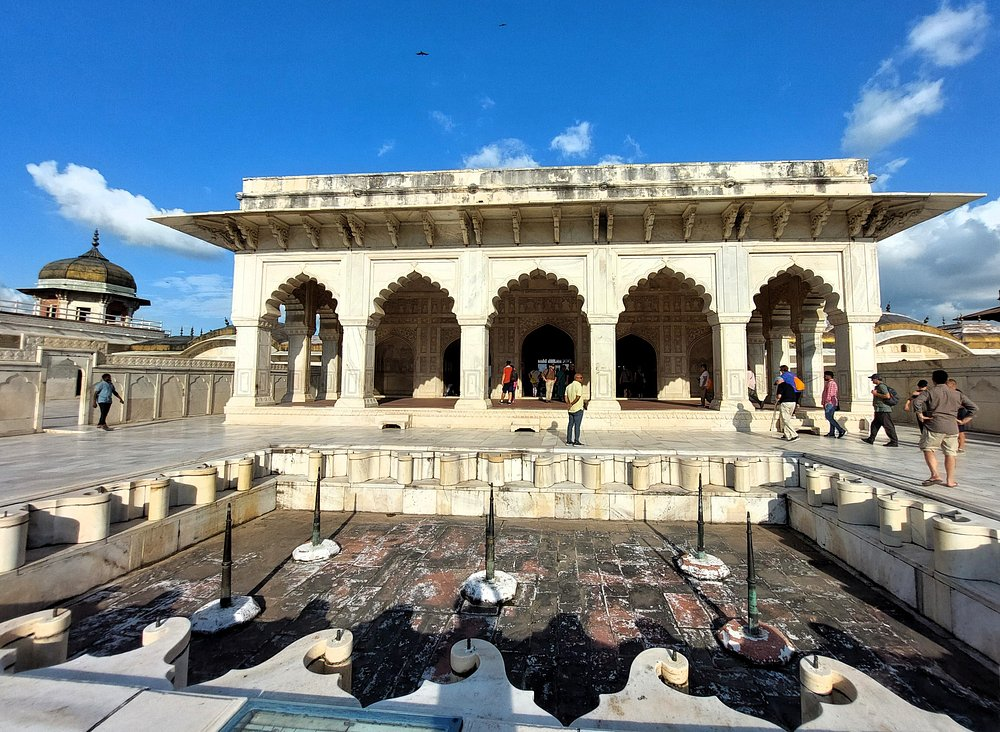
When you think of Emperor Shah Jahan, your mind inevitably floats to the Taj Mahal—the ultimate white marble masterpiece. But to truly understand the man, the visionary, and the family man, you have to step inside the Agra Fort, bypass the public courts, and find his most private sanctuary: the Khas Mahal, or the “Special Palace.”
While the rest of the fort shouts the story of empire in sturdy red sandstone, the Khas Mahal offers a soothing, intimate whisper in translucent white marble.
The Emperor’s Private Canvas
Shah Jahan, unlike his grandfather Akbar, was an ardent lover of pure, unadorned white marble. He had parts of the older red sandstone palaces demolished or refashioned, replacing them with structures that reflected his refined, almost ethereal aesthetic. The Khas Mahal, completed in the 1630s, is the jewel in this architectural crown, serving as the Emperor’s personal residence and the heart of the royal living quarters (Aramgah-i-Mualla).
It’s where he retreated from the public fanfare of the Diwan-i-Aam and Diwan-i-Khas, to live among his closest family.
Architecture: The Poetry of Pure White
The palace is a breathtaking study in symmetry and subtlety, a world away from the robust, dramatic scale of the surrounding red fort.
- The Luminous Material: It is built entirely of pristine white marble. Look closely, and you’ll see the marble is decorated with delicate floral and geometric motifs inlaid with semi-precious stones (a precursor to the pietra dura work that defines the Taj Mahal). Though much of the original gold and colorful frescoes have faded, traces of the royal colors—gold and blue—still hint at its former splendor.
- The Central Court: The main building consists of a central hall and flanking marble pavilions, all resting on an elevated terrace. This palace was deliberately designed to open out toward the river Yamuna, maximizing the cool breeze and the stunning natural view.
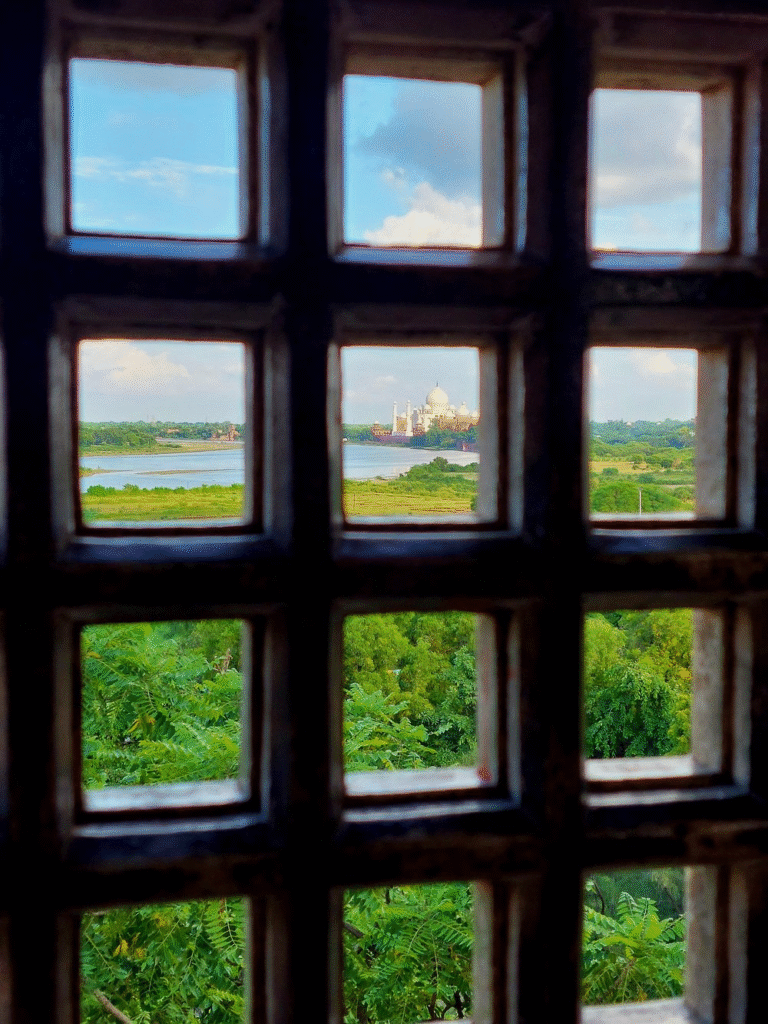
- A Room with a View: Just to the side of the Khas Mahal is the Musamman Burj, an octagonal tower and balcony, offering what is arguably one of the most poignant views in the world: a direct, unobstructed line of sight to the Taj Mahal. It is here that Shah Jahan spent his final years, imprisoned by his son Aurangzeb, gazing across the river at the tomb of his beloved wife, Mumtaz Mahal.
- The Royal Nurseries: Flanking the central marble hall are two nearly identical pavilions, built primarily of red sandstone but then plastered with white shell plaster and richly painted to resemble the central marble structure. These pavilions are traditionally believed to have been the apartments of Shah Jahan’s two favorite daughters, Jahanara Begum and Roshanara Begum.
Gardens and Water: The Mughal Paradise
Adding to the Khas Mahal’s sense of serenity and seclusion is its thoughtful integration with nature and water:
- The Anguri Bagh: To the west of the palace lies the Anguri Bagh (Grape Garden), a perfect example of the Persian-style Charbagh (four-part) garden. This garden, divided symmetrically by walkways and water channels, served as the private playground and retreat for the royal women, providing a cool, perfumed oasis protected by the surrounding palace walls.
- The Fountain of Calm: A rectangular ornamental pool with fountains sits right in front of the central hall. Imagine the gentle splash of water, the scent of the nearby gardens, and the cooling effect the fountains would have had on the white marble in the blistering Agra heat—true Mughal luxury!
Significance: The Palace of Intimate History
The Khas Mahal holds a distinct place in Mughal history:
- A Shift in Style: It marks the definitive shift in Mughal architecture from Akbar’s grand, secular red sandstone to Shah Jahan’s delicate, refined white marble aesthetic, setting the stage for the creation of the Taj Mahal.
- A Center of Family Life: It was more than a palace; it was a home. It’s where imperial family life, joy, leisure, and ultimately, great sorrow, played out.
- The Final View: Its connection to the Musamman Burj and the poignant tale of Shah Jahan’s imprisonment makes the Khas Mahal complex one of the most emotionally resonant spots in the entire fort. It’s where a King’s mighty empire ended, replaced by the solitary view of his greatest monument to love.
The Emperor’s Ear: Diwan-i-Aam – The Hall of Public Justice
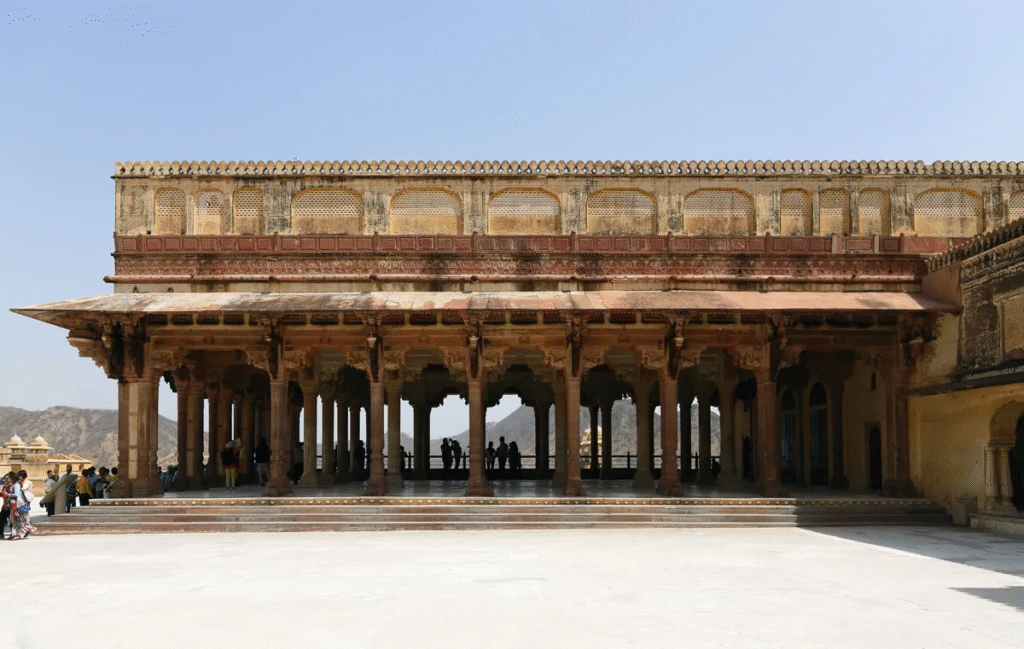
Step into the sprawling courtyard of the Agra Fort, and you’ll find the impressive structure that once formed the bustling heart of the Mughal Empire’s political life: the Diwan-i-Aam, or the Hall of Public Audience. This was not just an administrative building; it was the sacred stage where the Emperor, as the ultimate embodiment of justice, met his subjects.
It’s where the high drama of governance unfolded every day, reminding every noble and commoner present who held the final, unquestionable authority.
Purpose: The Seat of Imperial Justice
The Diwan-i-Aam served a singular, powerful function: to bridge the vast gap between the supreme ruler and the common man. Every day, the Emperor—primarily Shah Jahan, who built this version in the 1630s—would hold court in a ceremony known as Jharokha Darshan (the public appearance at a window or balcony).
This practice:
- Resolved Grievances: Common citizens could present petitions and complaints directly to the Emperor, upholding the ideal of accessible and benevolent governance.
- Showcased Authority: It was a daily ritual to display the sovereign’s power, wealth, and majesty to the assembled nobles, officials, and public, maintaining the necessary awe and obedience.
- Acted as a Daily Barometer: It allowed the Emperor to gauge the mood and morale of his people and the loyalty of his court.
Architecture: The Stage of Power
The Diwan-i-Aam is architecturally magnificent, yet its grandeur is strictly formal and hierarchical, designed to focus all attention on the central seat of power.
- The Hall of Forty Pillars: The structure is an expansive, open-sided pavilion, often referred to as a Chihil Sutun or “Forty-Pillared Hall.” Its flat roof is supported by numerous stately columns, which are often grouped into triple arches on the façade, creating a sense of ordered rhythm and scale.
- Red Sandstone, White Plaster: Though much of the exterior construction is Shah Jahan’s characteristic red sandstone (the original fort material), he had it coated with a brilliant white shell-lime plaster (chunam), polished to resemble the smooth, elegant white marble he so adored. Traces of gold and color on the ceiling and columns hint at its former, dazzling appearance.
- The Throne Room (Takht-i-Murassa): The focal point is the elaborate, raised marble chamber on the eastern wall. This was the Emperor’s jharokha, the ‘Takht-i-Murassa’ (The Throne Room). Here, framed by three elegant, cusped arches, the Emperor would sit, physically and symbolically elevated above his entire court.
- Pietra Dura Art: The wall behind the throne was once richly adorned with exquisite floral panels of pietra dura (inlaid semi-precious stones), a hallmark of Shah Jahan’s refinement.
- The Baithak: Directly below the throne chamber stood a marble dais, the Baithak, reserved for the Wazir (Prime Minister), who would receive the petitions and relay them to the Emperor.
- The Railings of Rank: The assembled court was strictly divided by two railings: a gold-plated railing closer to the throne separated the highest-ranking nobles, while a silver railing enclosed the rest of the great hall, visually enforcing the rigid hierarchy of the Mughal court.
Echoes of the Past
To stand in the Diwan-i-Aam today is to feel the weight of imperial power and the daily churn of human life.
Imagine the scene: thousands of subjects and courtiers packed the vast courtyard; the brilliant color of turbans, silks, and banners; the hushed atmosphere broken only by the loud call of the court official as he presented a petition; and, above it all, the serene, unmoving figure of the Emperor on his dazzling white marble throne, dispensing justice that determined the fate of his vast empire.